Back to projects

Featured case study

Clothing E-commerce Template

Building a realistic full-stack ecommerce foundation

This project started as a learn-by-doing full-stack challenge and grew into a reusable ecommerce template for small clothing stores. It focuses on practical store workflows, bilingual UI, admin management, server-side validation, variant-level stock, and deployment readiness.

Project walkthrough

A quick look at the storefront and responsive experience

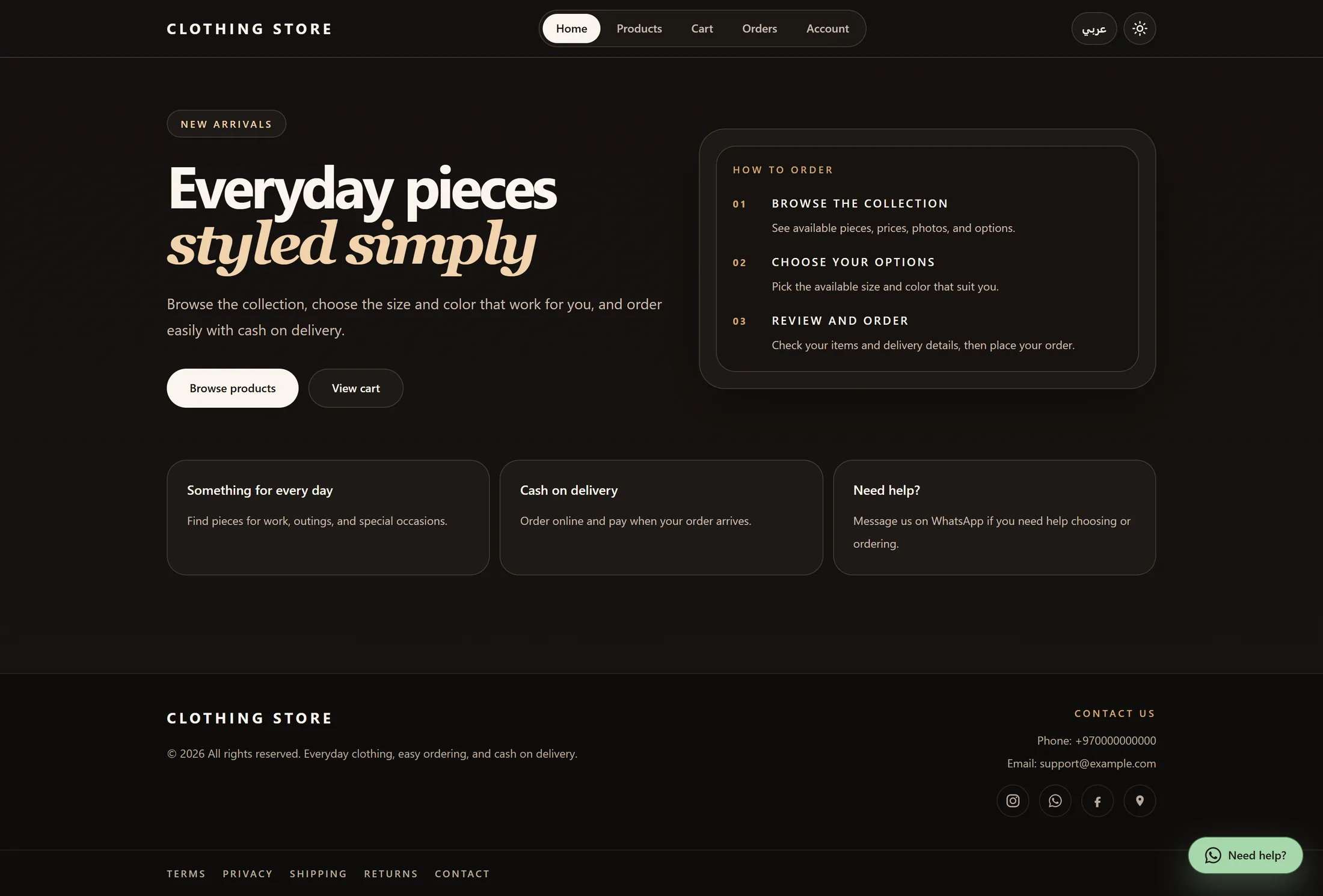
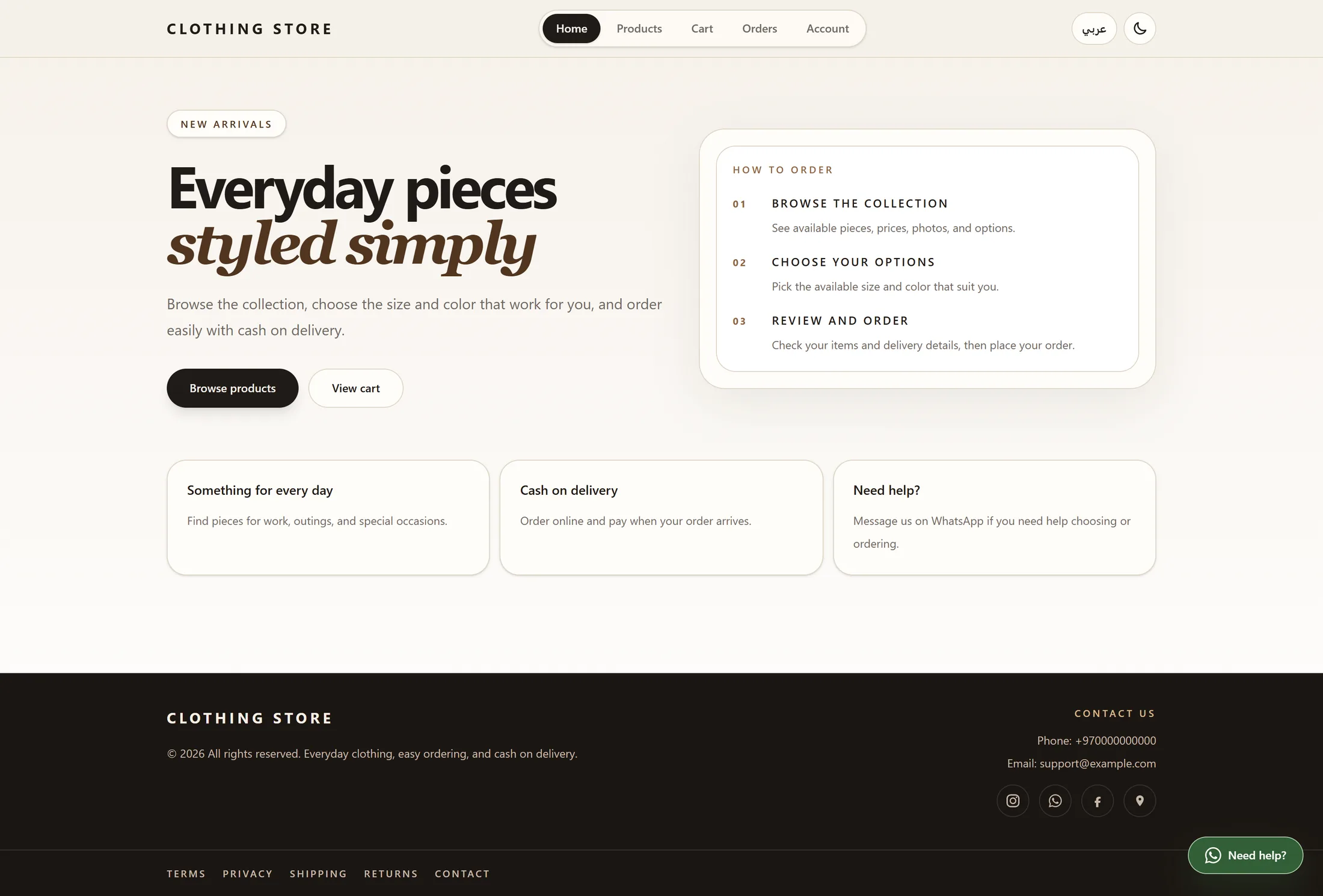
These local demo videos show the project using demo data only. The desktop view is the main walkthrough, while the phone view shows how the same store experience adapts to smaller screens.

Desktop view — wider layout for browsing, checkout, and admin workflows.
Mobile view — the same product flow presented in a compact responsive layout.

Overview

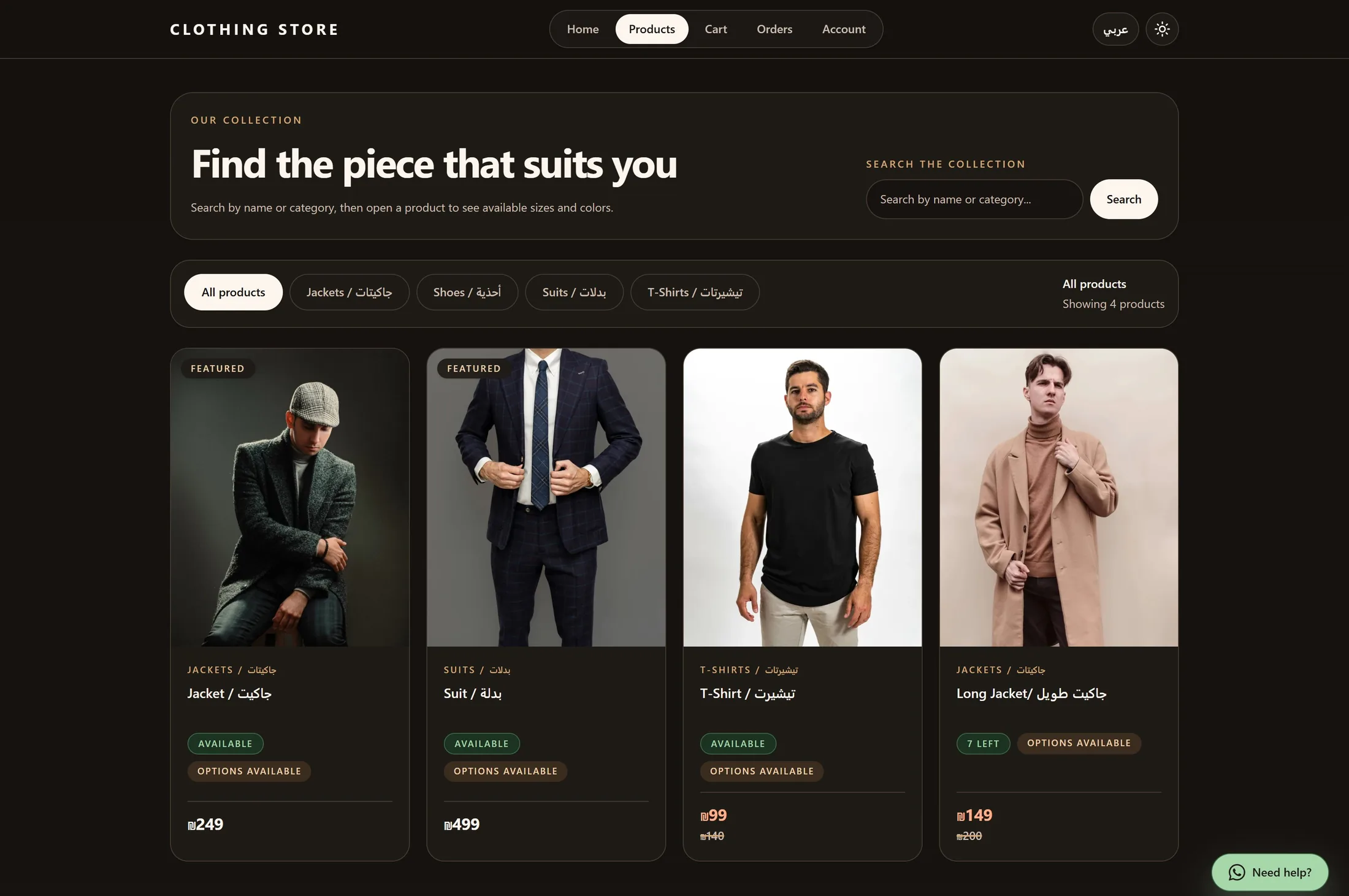
The project is a full-stack ecommerce template built for small clothing stores. It includes a public storefront, product catalog, cart and checkout flow, customer orders, admin management, authentication, image handling, email configuration, bilingual UI, and deployment setup.

The project was maintained as a separate clothing-store template after starting from an existing hardened ecommerce starter. The goal was not to build a large multi-tenant SaaS platform, but a safer reusable starter where each future store can have its own repository, database, environment variables, branding, products, and deployment.

It should be described honestly as a demo-ready and client-ready template that is still going through staging verification and production-hardening review before any real client launch.

Problem

Small clothing stores need more than a simple product grid. They need practical product management, size and color variants, accurate stock behavior, checkout validation, order records, delivery details, and a clear admin experience.

For Arabic/English stores, the interface also needs natural bilingual wording and RTL/LTR layout support instead of direct translation only. The system also needs to stay safe as the catalog grows, so product browsing should not load and filter every product in the browser.

Solution

I built a reusable clothing ecommerce template with a public storefront, protected customer/admin flows, product and category management, clothing variants, cart and checkout, order snapshots, image uploads, email behavior, and deployment configuration.

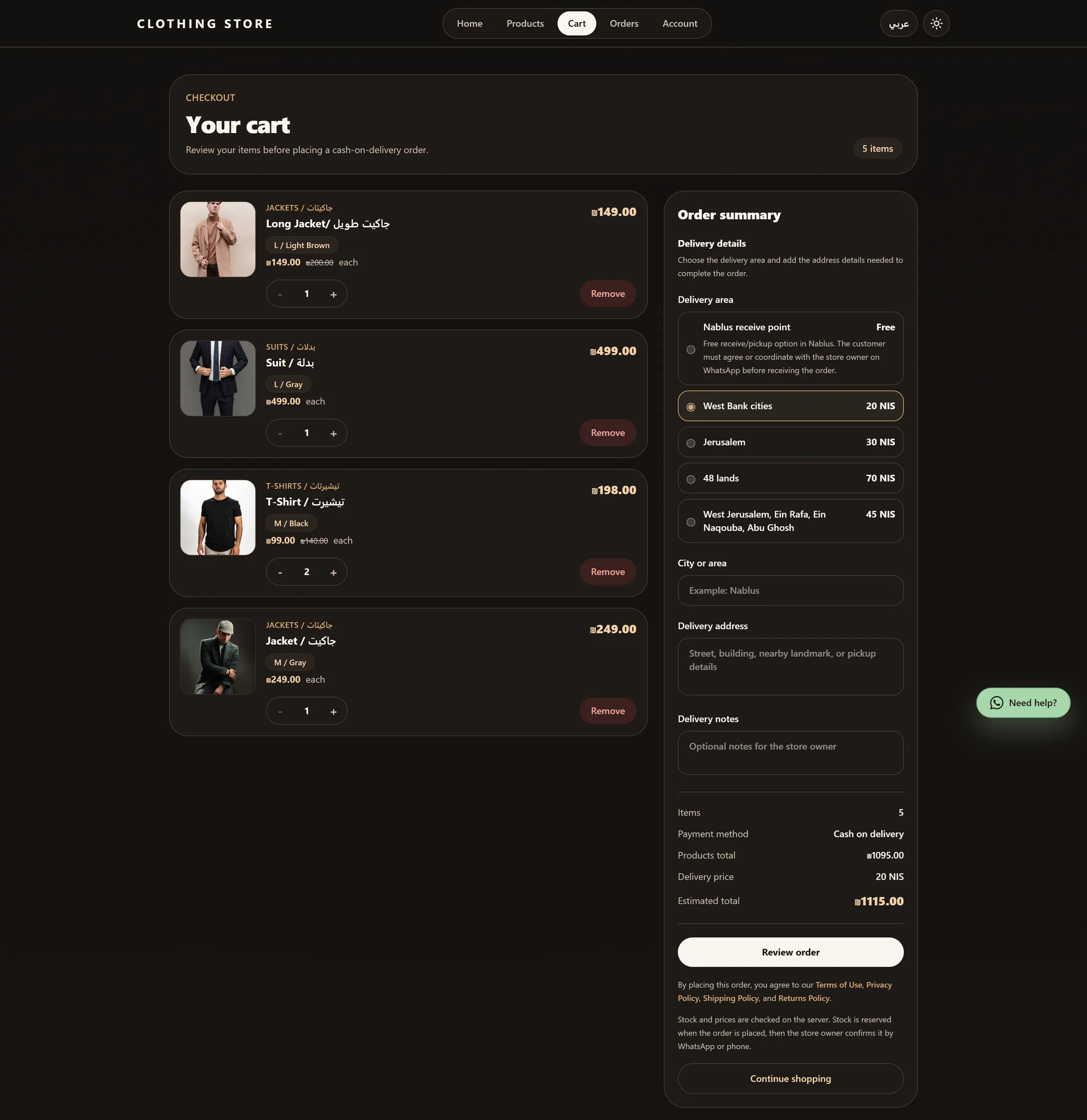
The storefront uses server-side search, category filtering, and capped load-more pagination. Customer support is helped by a configurable WhatsApp shortcut, but orders still go through the website checkout so validation, stock reservation, and order snapshots are not bypassed.

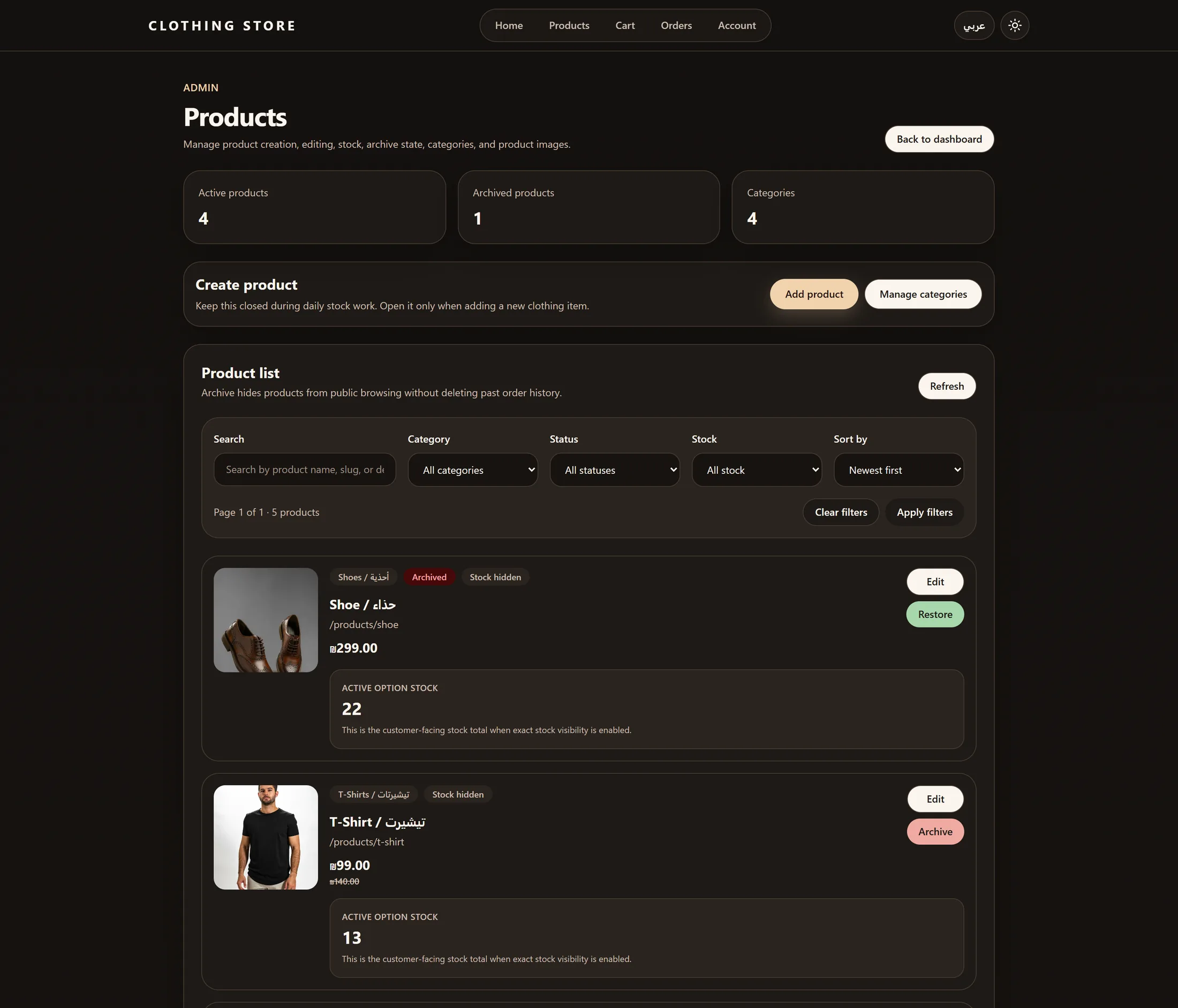
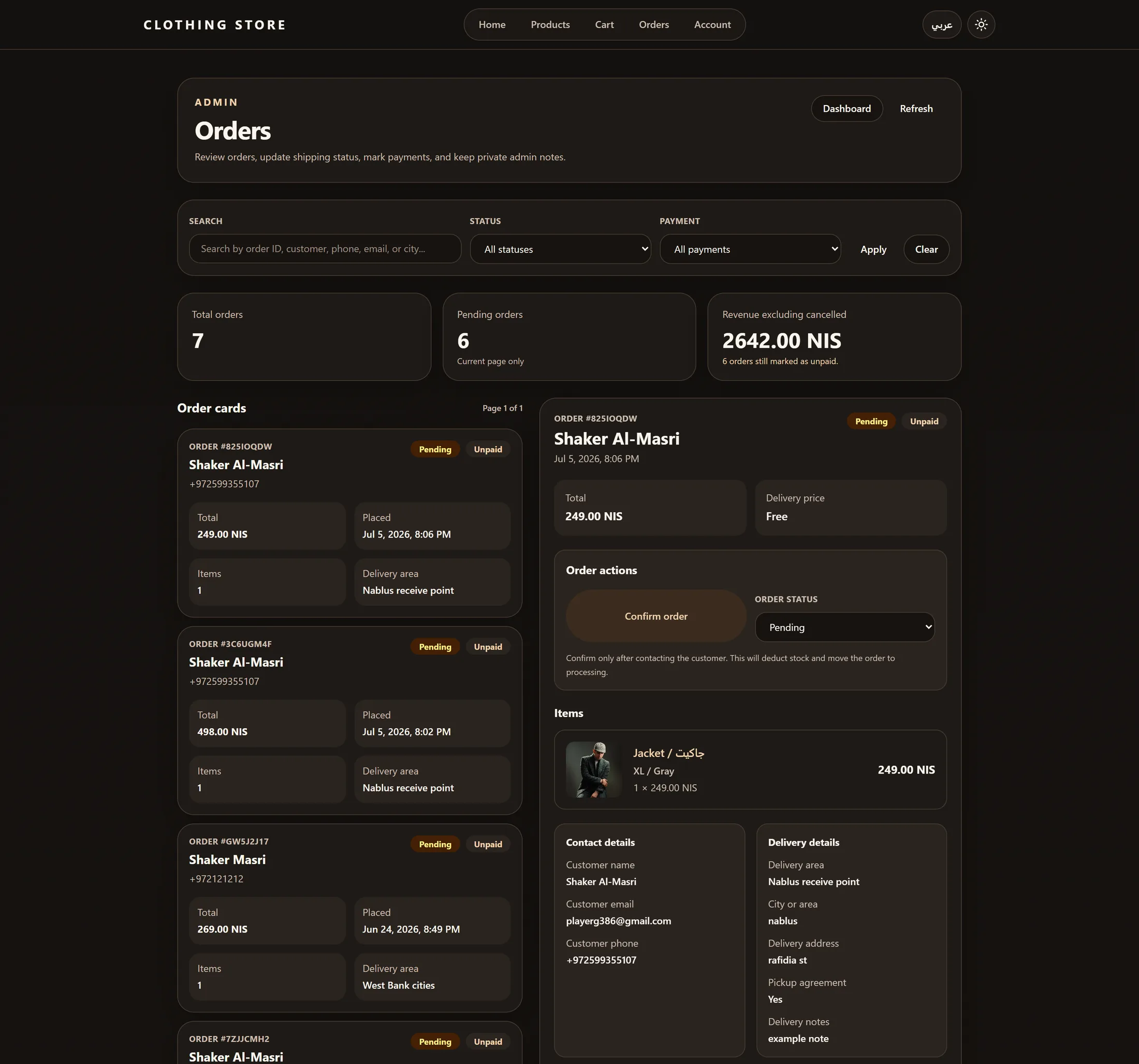
The admin side focuses on safe management: server-side filters and pagination, product/variant editing, category management with safe deletion rules, order cards, status/payment updates, internal notes, and mobile-friendly order details.

Main features

The project combines customer-facing ecommerce features with admin tools and production-aware engineering decisions.

  • Public storefront with product listing, product details, categories, cart, checkout, and customer orders.
  • Server-side product search, category filtering, and capped load-more pagination for safer browsing as the catalog grows.
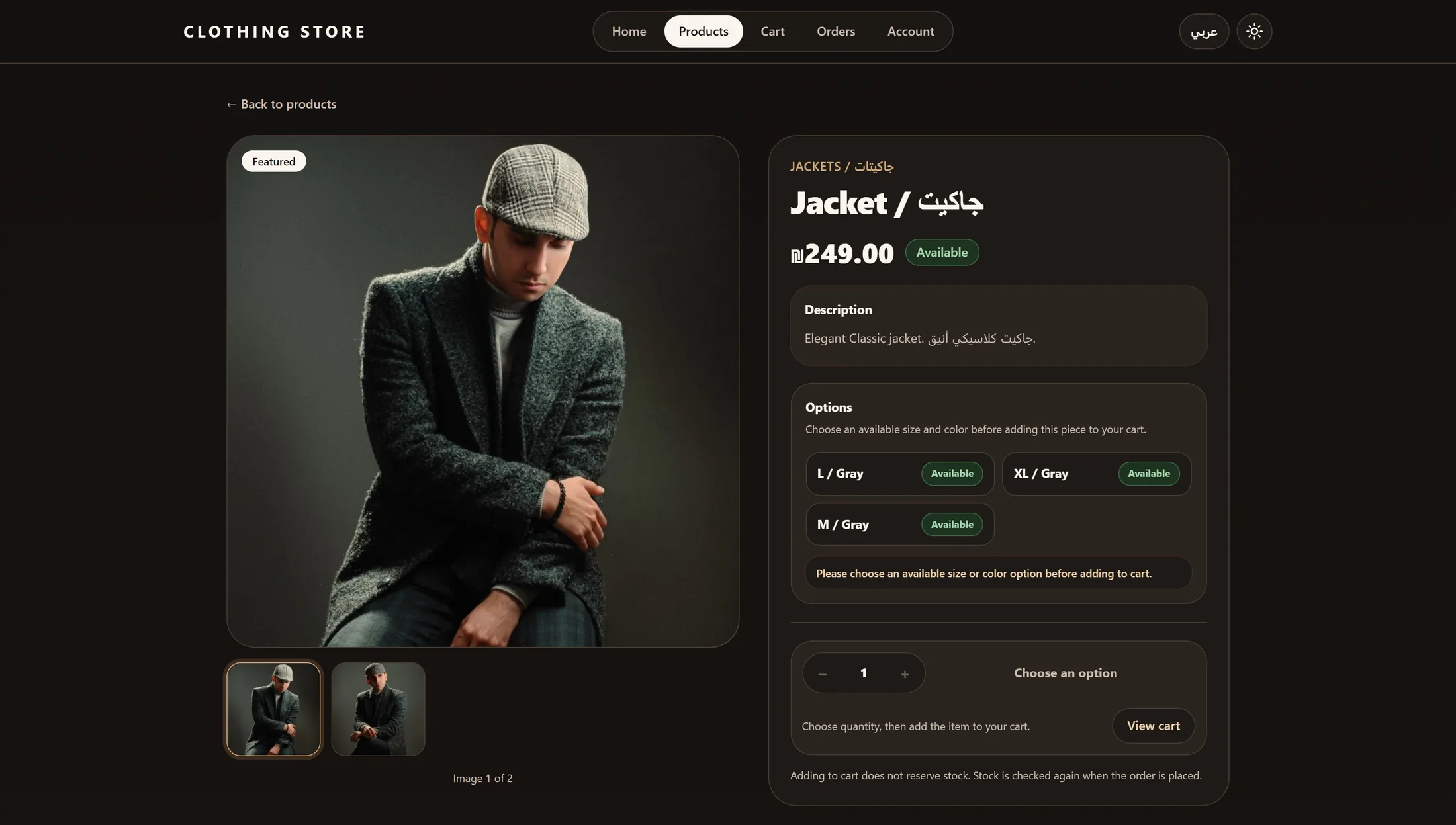
  • Clothing variants for size and color with stock tracked at the variant level.
  • Checkout-time stock reservation with protection against deducting stock twice during admin confirmation.
  • Delivery area selection with delivery price snapshots so old orders remain understandable after delivery settings change.
  • Admin dashboard for products, categories, orders, variants, inventory, order status, payment status, and internal notes.
  • Arabic/English UI with RTL/LTR support and local-market wording improvements.
  • Configurable WhatsApp support shortcut and optional store-owner order email notifications.
  • Deployment setup using services such as Render, Neon, Cloudinary, Upstash Redis, and email configuration.

Architecture and technical decisions

The app uses server-side logic for important ecommerce operations such as product availability, pricing, discounts, cart validation, stock checks, checkout, and order creation. This avoids relying on values that can be changed in the browser.

For clothing products, I moved toward a variant-first model. Size and color are treated as real product variants, and cart/order data references the selected variant instead of treating size and color as frontend-only labels.

Order items snapshot important purchase details, and delivery details snapshot the selected delivery area and price. This keeps historical orders clear even if an admin later changes product, variant, or delivery configuration.

The store-owner order notification is intentionally best-effort and outside the checkout transaction, so an email provider issue does not cancel a valid customer order after stock has already been reserved.

Security and reliability

Security was part of the project scope from the beginning. I worked with environment variable validation, protected admin/customer flows, server-side validation, rate limiting, safe auth/session handling, security headers, and careful handling of secrets.

Protected mutation routes use CSRF/same-origin style checks where implemented, and sensitive APIs are hardened so client input, route params, query params, authorization, and returned data are treated carefully.

Checkout behavior is designed so the server controls prices, stock, totals, and availability. Payment processing is intentionally out of scope for now, which avoids adding payment-specific risk before the core store foundation is stable.

Unexpected API failures can be logged with safe searchable error reference IDs, while user-facing route error boundaries avoid showing raw technical errors to customers or admins.

Testing and quality

The project uses quality checks such as ESLint, TypeScript type checking, production build verification, Vitest, React Testing Library, Playwright end-to-end tests, and manual testing for important user and admin flows.

Test coverage focuses on important ecommerce behavior such as public pages, auth, cart, orders, product display, stock visibility, admin guards, and admin filtering smoke checks.

I learned that tests also need maintenance. UI text, demo data, product slugs, and labels can change, so test locators and test data need to be reviewed as the application evolves.

Learning and AI-assisted workflow

This project started as a learn-by-doing full-stack project. I had a foundation in frontend and backend concepts from university courses and online learning, but I was not yet confident about how to structure and build a real production-style application from start to finish.

I used AI as a learning, planning, debugging, and code-review assistant. At first, it helped me understand unfamiliar concepts and compare implementation options. Over time, the project also taught me how to use AI more effectively: breaking work into smaller checkpoints, writing clearer prompts, reviewing suggestions critically, and separating design, backend logic, security, testing, and deployment decisions instead of treating everything as one large task.

The important part of this workflow was that I remained responsible for understanding the code, applying changes, testing behavior, reviewing tradeoffs, and deciding what should or should not be included. This helped me become faster and more structured without treating AI as a replacement for real development understanding.

Challenges and lessons learned

The biggest lessons came from the parts that looked simple at first: stock modeling, checkout consistency, authentication setup, deployment configuration, bilingual wording, admin usability, and keeping the scope safe.

I learned that a real project is not only about making features work. It also needs good data modeling, safe server logic, clear user flows, maintainable configuration, testing, accessibility, deployment awareness, and careful decisions about what not to build yet.

Future improvements

Future work could include the broader production-readiness/security audit, stronger monitoring and backups, more complete Playwright coverage, screenshot and demo walkthrough content, and optional payment support only when the core store is stable enough for that scope.

Caching and performance tuning should come after measured usage or safe smoke testing shows a real need, instead of adding complexity before the core business rules are stable.

Features such as POS, SMS, coupons, accounting integrations, delivery-company integrations, CSV import, and PWA behavior should stay out of scope until there is a clear client need and a safe implementation plan.